What is Solana?
Understand what Solana is and how it works
Written By _flush_f0x_
Last updated 14 days ago
Solana launched in 2020 with one central design goal that shapes everything about it: handle a very high volume of activity, quickly and cheaply. Where the earliest networks deliberately traded speed for other priorities, Solana was engineered from the start so that transactions confirm in a fraction of a second, for a fraction of a cent. In the years since, it has grown into one of the busiest and most widely used networks in all of crypto.
What Solana is
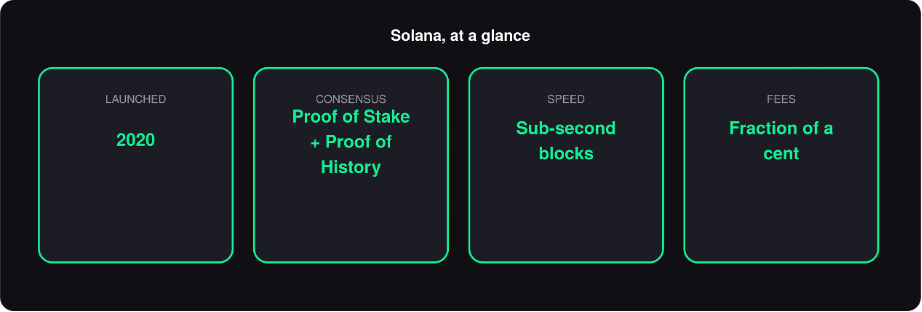
Figure 1: Solana, at a glance
Solana is a high-speed blockchain that, like Ethereum, can host other tokens and applications, not just its own coin. What people notice first, though, is how it feels to use: confirmations are near-instant and fees are so small they are barely noticeable.
That combination makes it especially pleasant for frequent, everyday activity, where the delay and cost of slower networks would add up.
Its native coin, SOL, is used to pay those small transaction fees and to help secure the network. Solana also carries the major stablecoins, so it gives you a fast, low-cost rail for moving USDT or USDC as well as SOL itself.
How it works
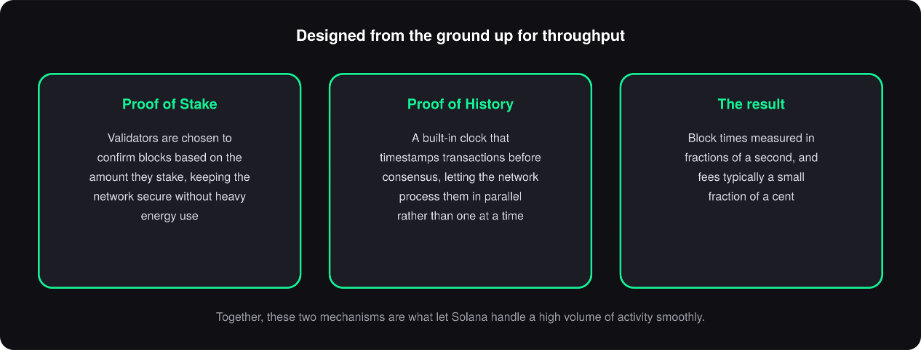
Figure 2: two mechanisms working together for speed
Solana’s speed comes from combining two ideas. The first is Proof of Stake, the same broad approach Ethereum uses, where validators are chosen to confirm transactions based on the amount of SOL they have staked. The second is a Solana innovation called Proof of History: a built-in way of timestamping transactions before they are confirmed, so the network can agree on their order without slowing down to check. Because the ordering is already established, validators can process many transactions in parallel rather than one at a time.
Together, these two mechanisms are what let Solana handle a very high throughput smoothly. The result you experience is simply that deposits confirm almost immediately and cost almost nothing.
A newer network, still maturing
Solana is younger than Bitcoin or Ethereum, and its ecosystem continues to grow and develop quickly. That youth is part of what lets it move fast and innovate; it is simply worth knowing you are using a newer, actively evolving network rather than the oldest and most battle-tested one. For everyday deposits and withdrawals, it works smoothly and reliably.
Where Solana shines
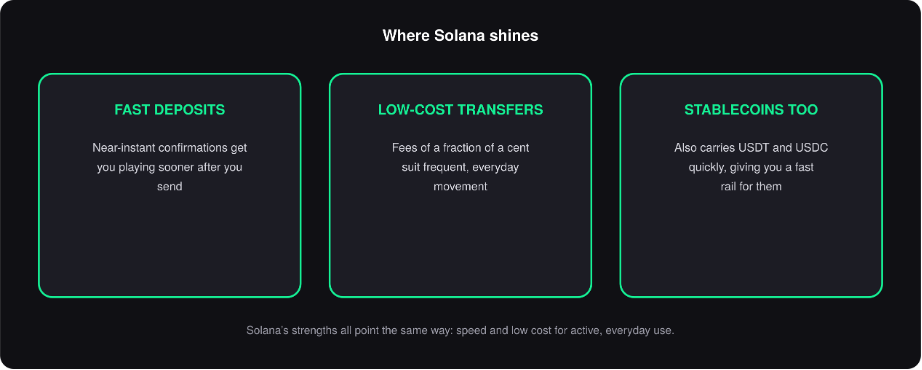
Figure 3: strengths that all point toward everyday use
Solana’s advantages line up neatly for anyone who moves crypto often. Fast confirmations mean less waiting between sending a deposit and being ready to play. Low fees mean regular, smaller top-ups are not eroded by charges. And because it also carries stablecoins, you can use it as a quick, cheap rail for USDT or USDC, not only for SOL. If your style is frequent, active use, Solana is very often the most comfortable choice.
Solana at a glance
What a transfer looks like in practice
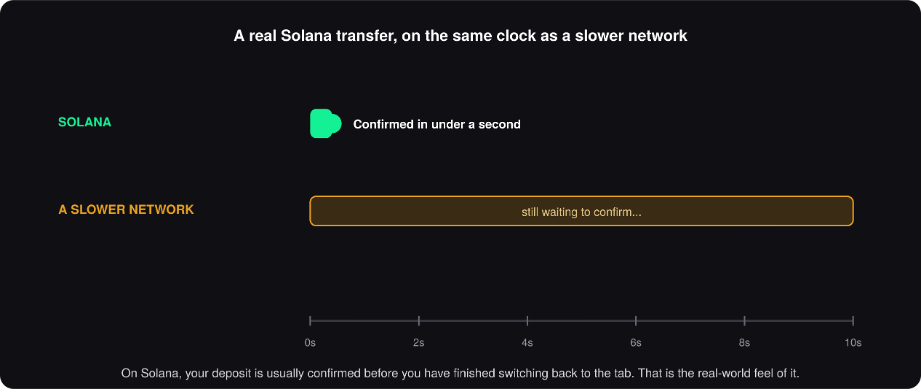
Figure 4: a real transfer, on the clock
The real-world experience of Solana is simply that it is fast. You send your deposit, and by the time you have switched back to Flush.io it has very often already confirmed. On a slower network the same transfer might still be settling; on Solana it is usually done in under a second, for a fee so small it is easy to forget it was there at all.
Using Solana on Flush.io
To deposit over Solana, choose your coin on the deposit page, whether that is SOL itself or a stablecoin carried on Solana, and make sure the network you send from is set to Solana to match. Deposits usually confirm within moments thanks to the network’s speed. As with every coin, matching the network on both ends is essential, and our crypto rails guide covers exactly how.
Good to know
Ideal for frequent, smaller transfers. Solana’s very low fees make it especially well suited to regular deposits and withdrawals.
SOL powers the network. Transaction fees on Solana are paid in its native coin, SOL.
Also a fast rail for stablecoins. Solana can carry USDT and USDC quickly and cheaply, giving you another strong option for moving them.
Speed does not change the fundamentals. Solana still relies on a decentralised network of validators, the same core principle behind every network in this series.
Match the Solana network when sending. As always, the sending and receiving ends must both be set to Solana: our rails guide explains why.
A great fit for active players. If you expect to deposit and withdraw often, Solana’s blend of speed and low cost is well worth trying.
Was this helpful?
Still need help? Ask the team